JAPAN: PHOTOGRAPHS BY FELICE BEATO——Harvard CURIOSity Digital Collections
Album of 48 photographic prints by pioneering photographer Felice Beato. Mostly views of places visited by foreign tourists at the beginning of the Meiji period, including Yokohama, Tokyo, Nagasaki, Kamakura, and along the Tokaido (the Eastern Sea Road). City and landscape views show buildings and streets, harbors, junks, Buddhist temples and pagodas, Shinto shrines and torii, Edo castle, cemeteries, roads, bridges, rivers, and mountains.
Cataloguing
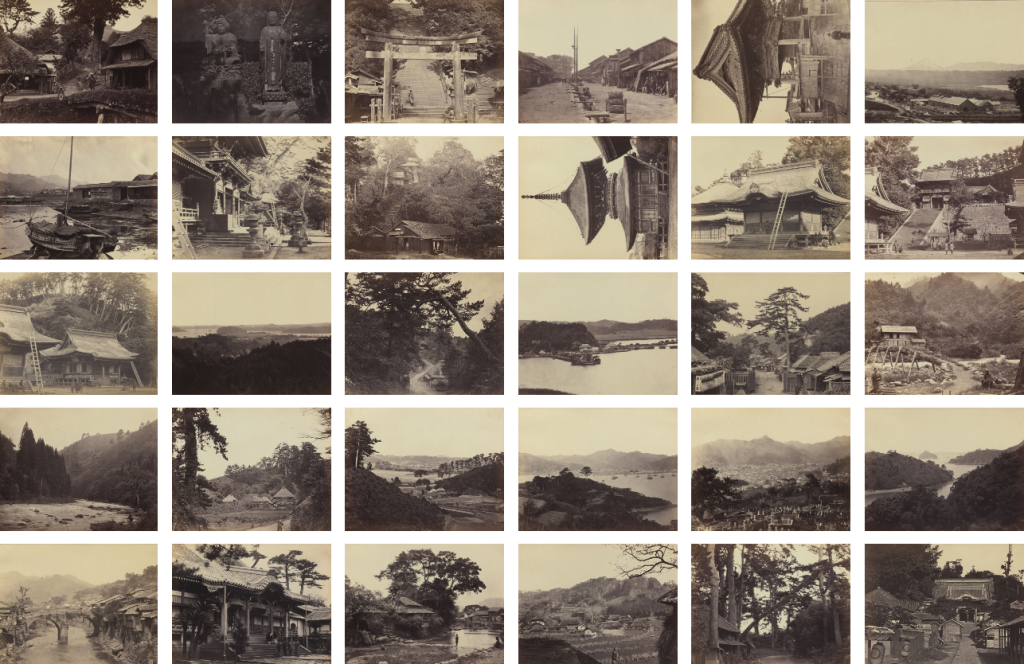
Composition:

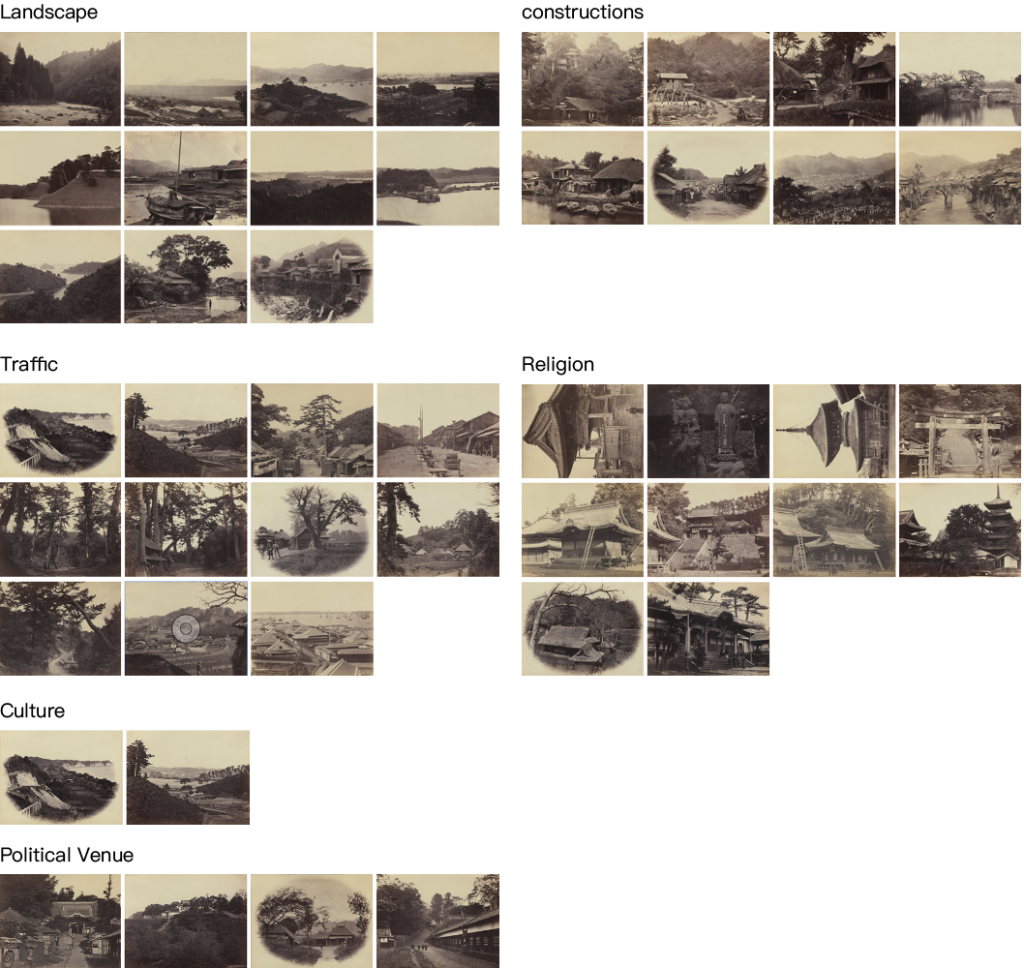
Element:
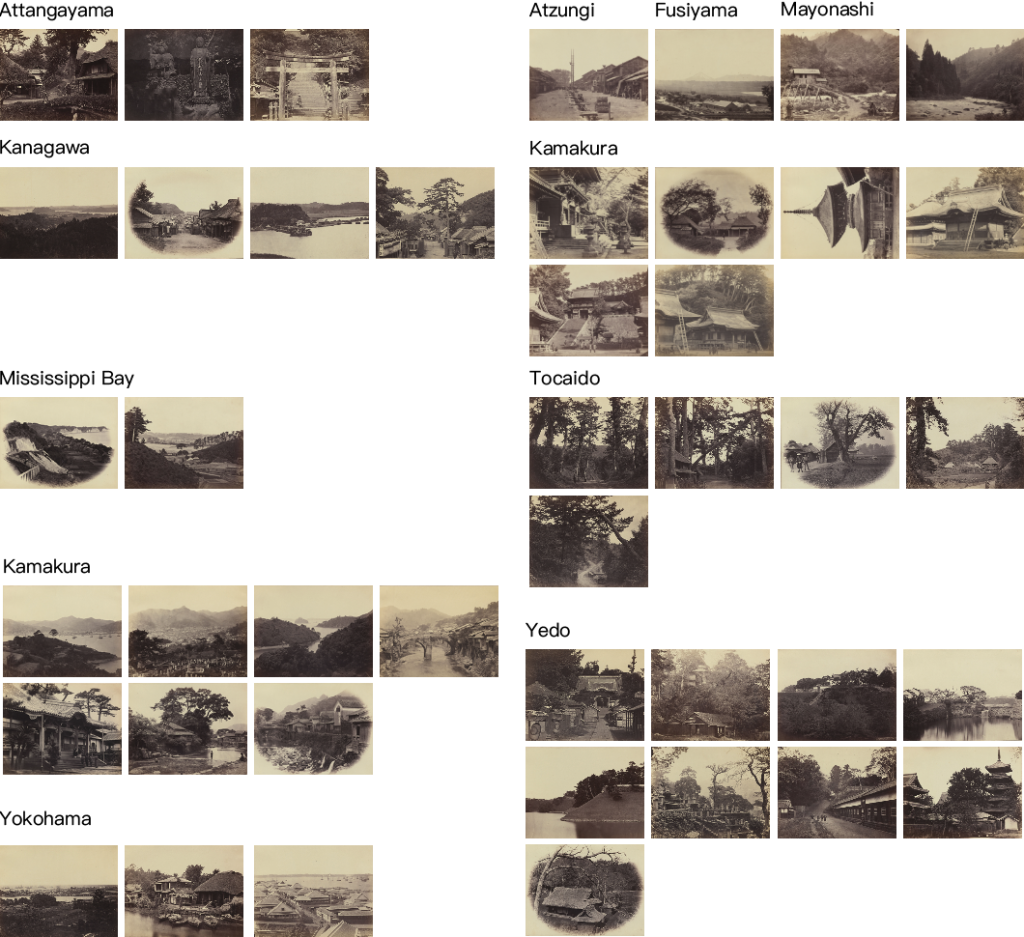
Location:
Advancing Progress – Location
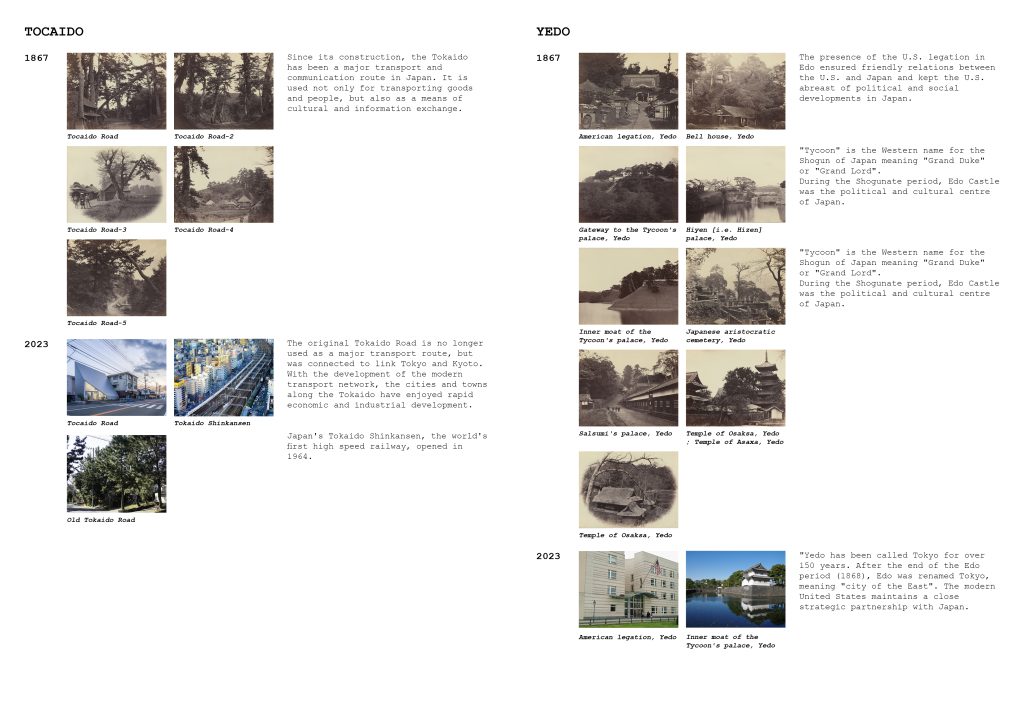
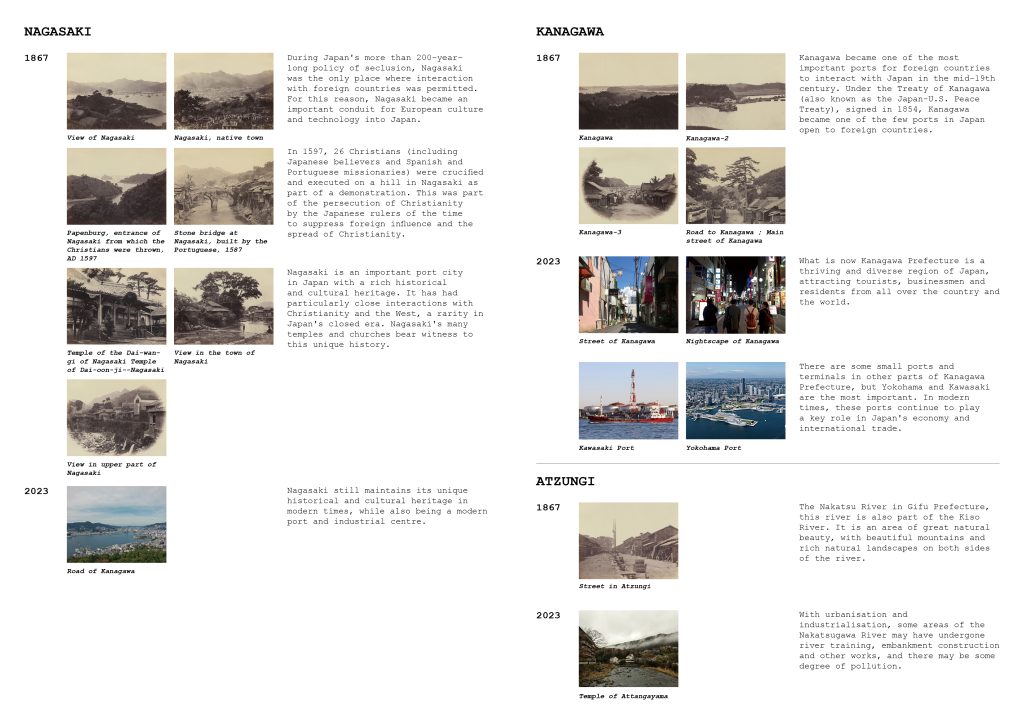
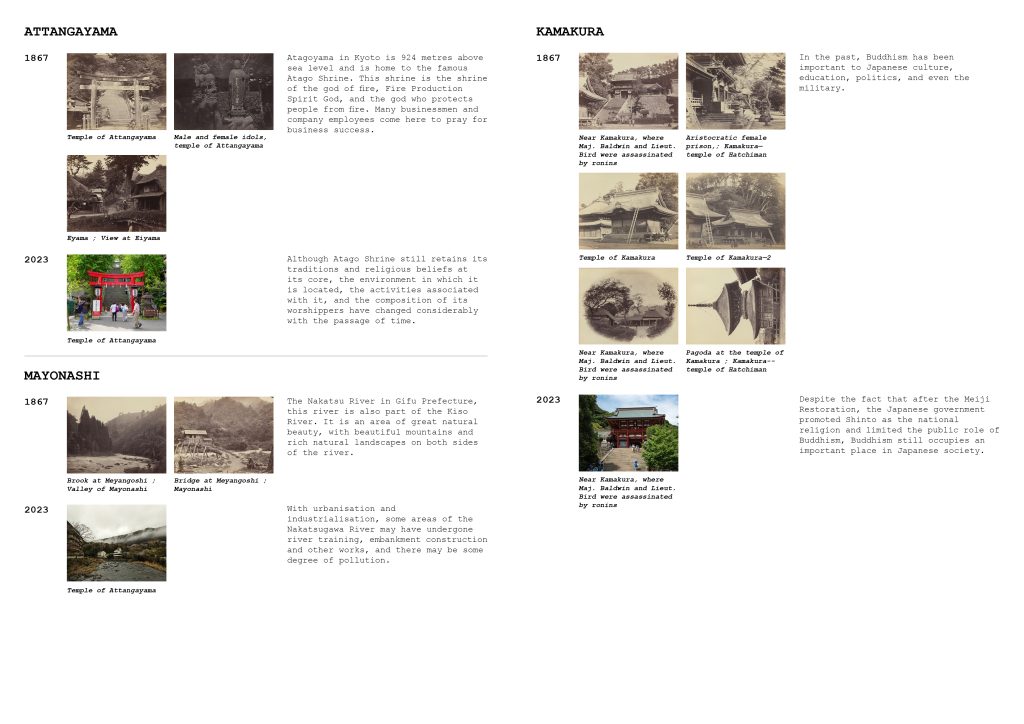
I decided to categorise the locations where the photos were taken and to add modern photos with similar perspectives.I spent a long time researching the information in these photographs and I needed to annotate them in the context of the time, of course, not every photograph could be annotated in some way, some were just landscapes.
I gave a brief description of each location, and added contextual notes to some of the photos, so that we could get a sense of the critical period that Japan was going through.
Visualization
I did some research on the background of these photos. They were all taken in 1867, which was a key period in Japan, linking the old and new eras (the beginning of the Meiji Restoration).
So it was decided to look for modern photographs with similar perspectives related to their locations for comparison.
I coloured the black and white photos to make them look less old and backward. This makes the comparison with modern photographs more accurate.
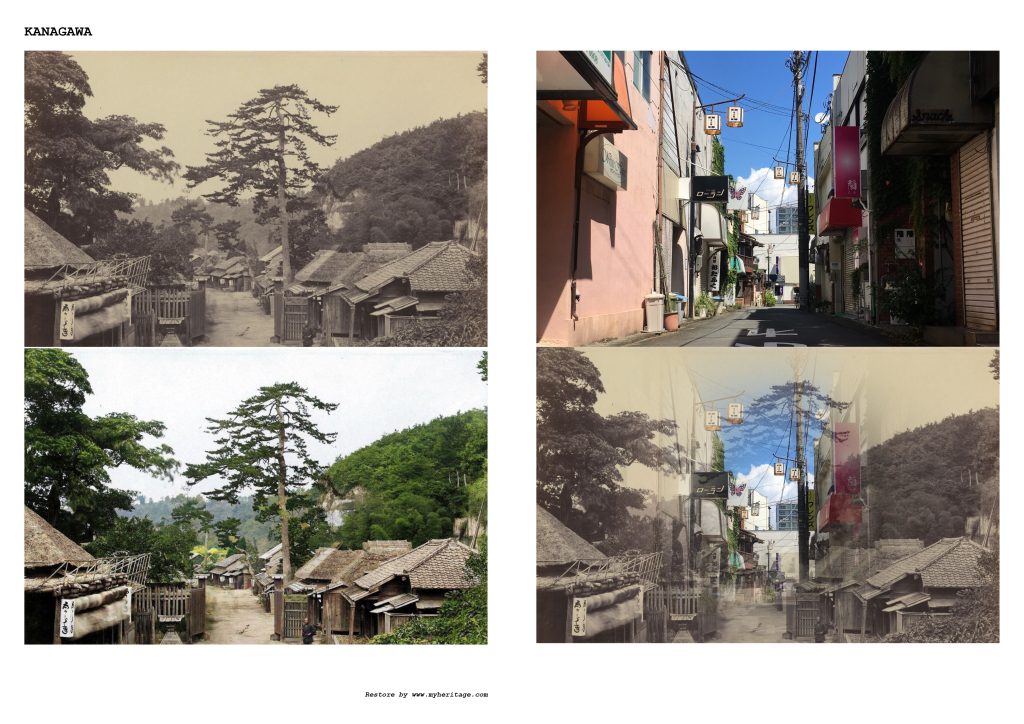
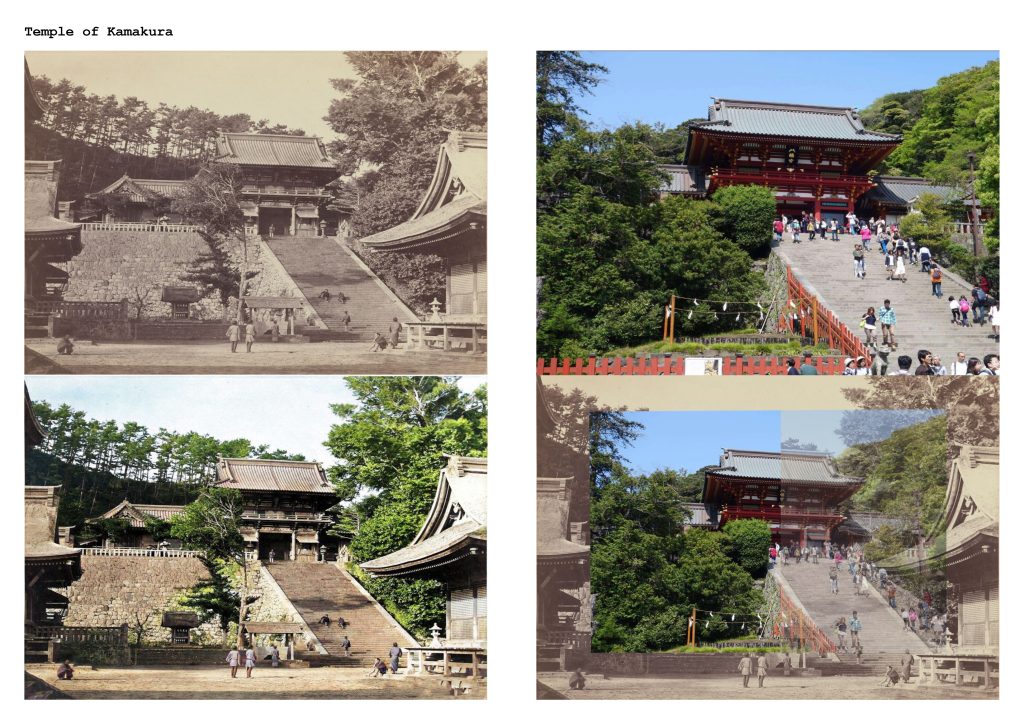
The composition of people coming to the temples is different, probably more tourists now.
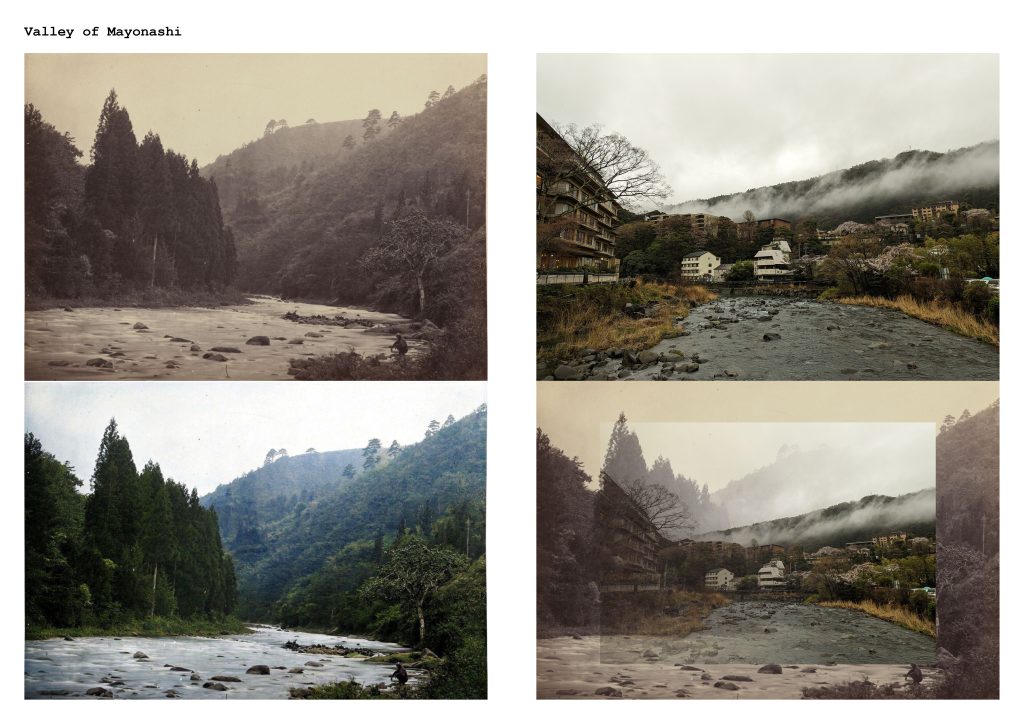
but many modern buildings have been built, probably resorts.
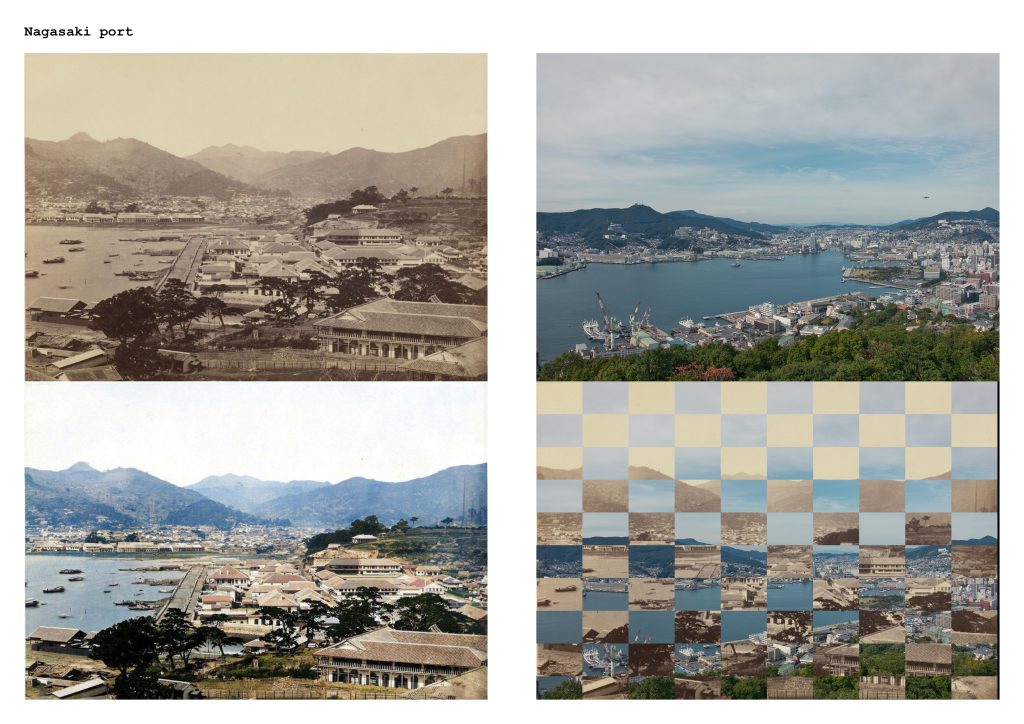
In categorising them, and in the context of my previous research (before that Japan had been closed for 200 years and was economically and technologically backward), I found that some of the names of the photographs were full of orientalist perspectives, prejudices or other emotions (this was taken by a western photographer). For example “Japanese rubbish”. But the dramatic thing was, who would have thought, that Japan would rapidly modernise and become a world power a year later.