
Reference & Reflection
Plain Text , Chapter 5. Literature Down to a pixel ,Dennis Tenen, 2017
In Dennis Tenen’s work Literature Down to a Pixel, he explores how the nature of literature in the digital age has changed through technological intervention.
As with Tenen’s discussion of how texts are screened and re-presented to readers, the way tennis matches are viewed has changed due to technologies such as live-streaming technology, multi-angle replay and virtual reality. These technologies enhance the viewing experience, but may also make viewers more dependent on the visuals than the match itself.
Similar to how Tenen explores how literature has been digitised and deconstructed, tennis has undergone a data-driven transformation. Every shot, running path, and game strategy of a player can now be tracked and analysed in detail. This detailed data provides an in-depth view of the game, but it may also reduce the natural sense of flow and unpredictability of watching the game, thus altering the traditional understanding of and interest in the game.
Tenen raises the issue of the literary experience in the digital environment, and similarly, the use of technology in the sport of tennis affects the personal experience of both players and spectators. The data and analyses provided by technology may influence the natural performance of players and the motivation of spectators to watch the match.
In Wikipedia, there are more than 500 references to Roger Federer.Some of the data and descriptions are as detailed as the number of times an athlete used a particular technique in a particular game, and what the success rate was.This trend has gradually deviated from the nature of the movement.The essence of tennis is simple: it’s a multi-round sport played over a net, and while statistics provide us with evidence to judge a player, the beauty of tennis lies in the uncertainty of the game and the individuality of the players. Does this quantification make sense?
《PULP》 Patrick Thomas, 2019
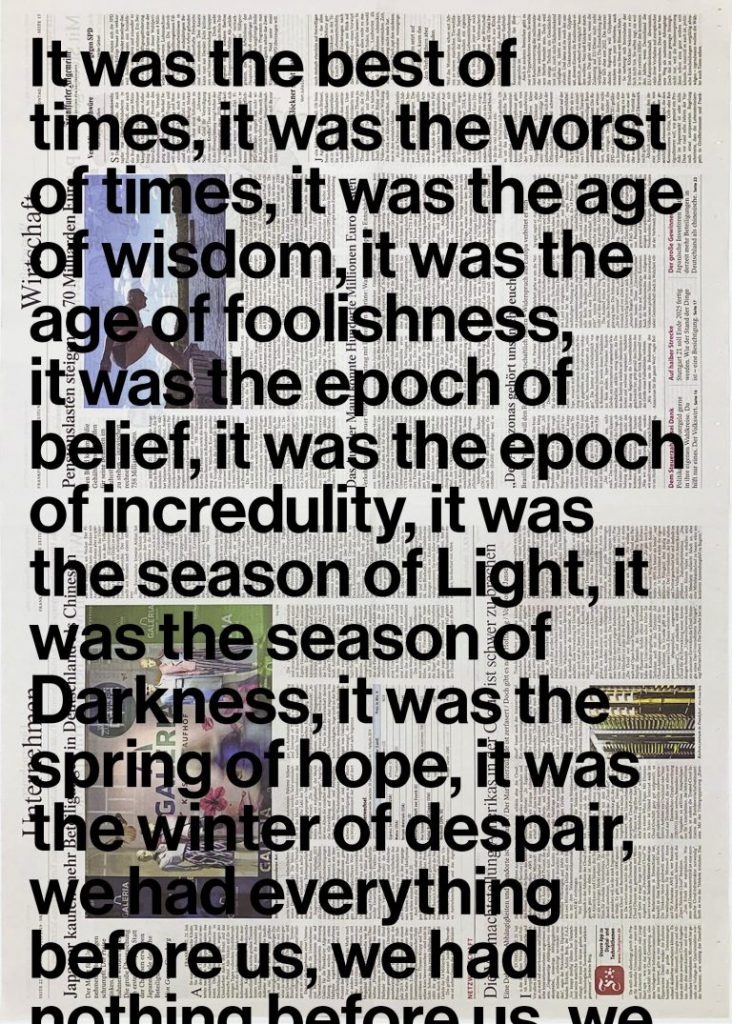


In Partick’s project, he responds to the ambiguity of truth in the digital age by attaching electronic patterns to newsprint in the form of screen prints. So I took the opposite approach in my next work.
Novak Djokovic vs Roger Federer | 2015 US Open
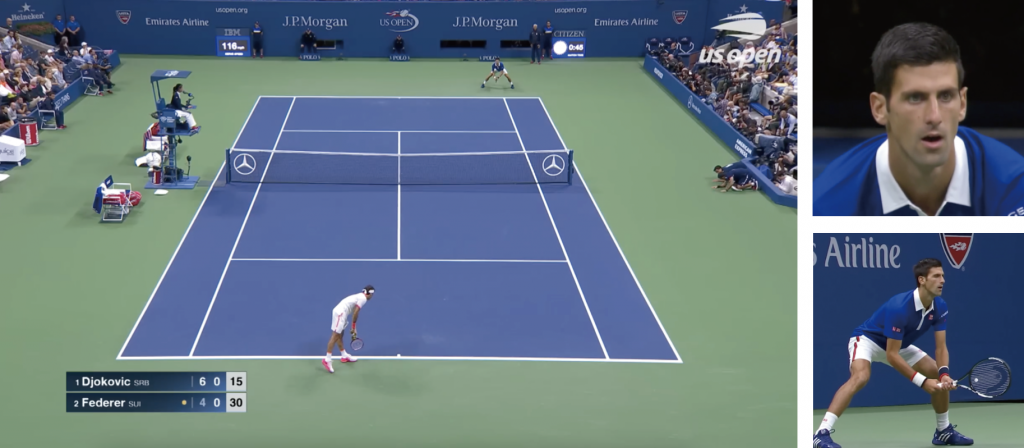
I have chosen a match video, and tried to strip away some of its elements to explore the following questions.
How are new media changing the way games and audiences interact?
Does it make sense to quantify the game?
What aspects of the game do viewers really care about?
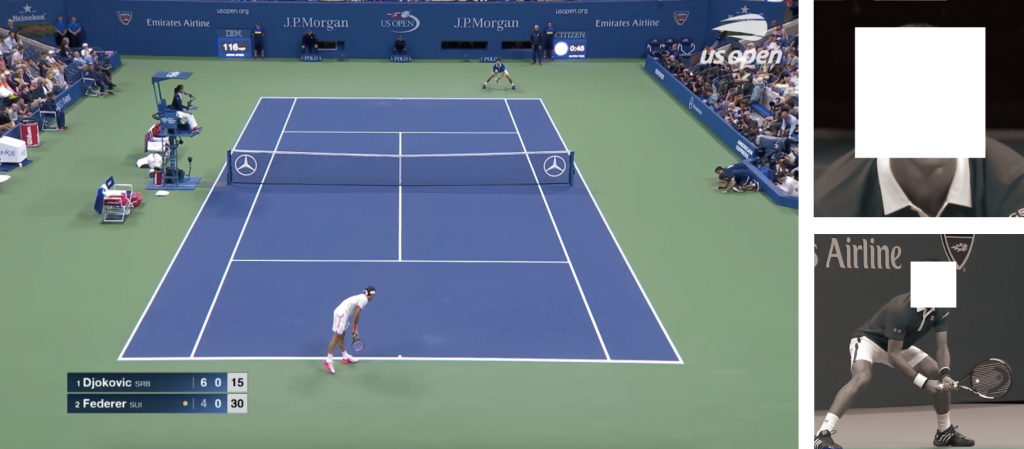
For the video medium, the most important thing is that we can see exactly what the athletes are doing, their expressions, their movements, the trajectory of the ball.My first step was to replace them with colour blocks and simulate the same movement as the original video.
So the game looks like this:
Then, I further removed the dynamics of the ball. I drew a grid to position the landing points of each ball and annotated their positions next to them.
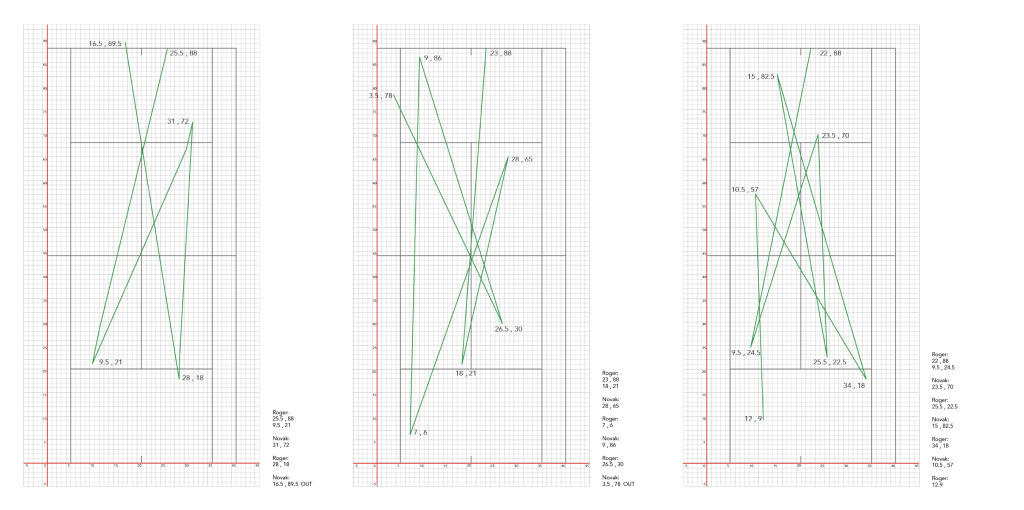
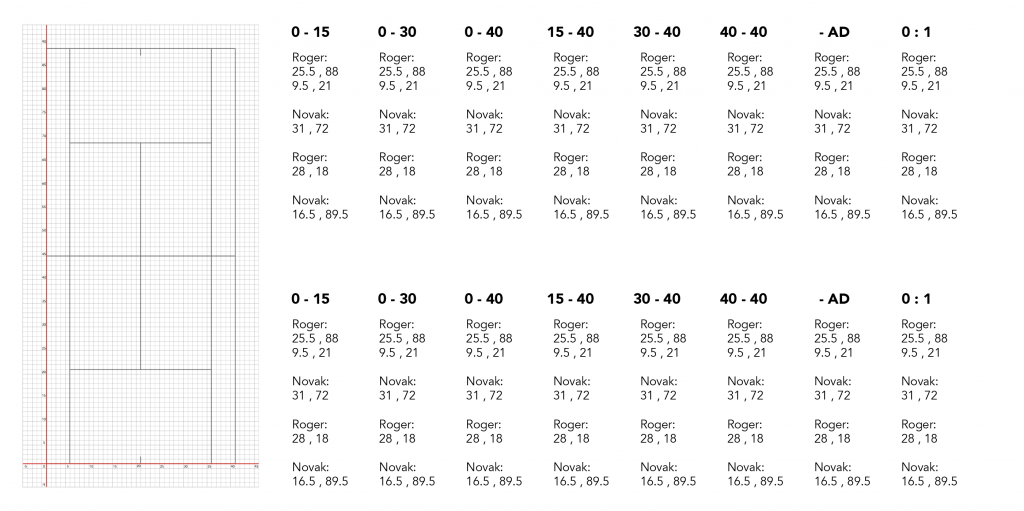
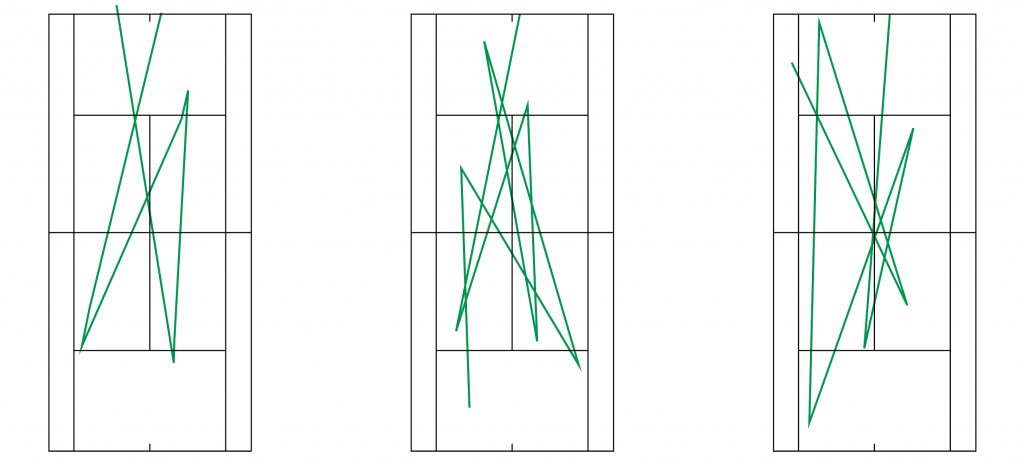
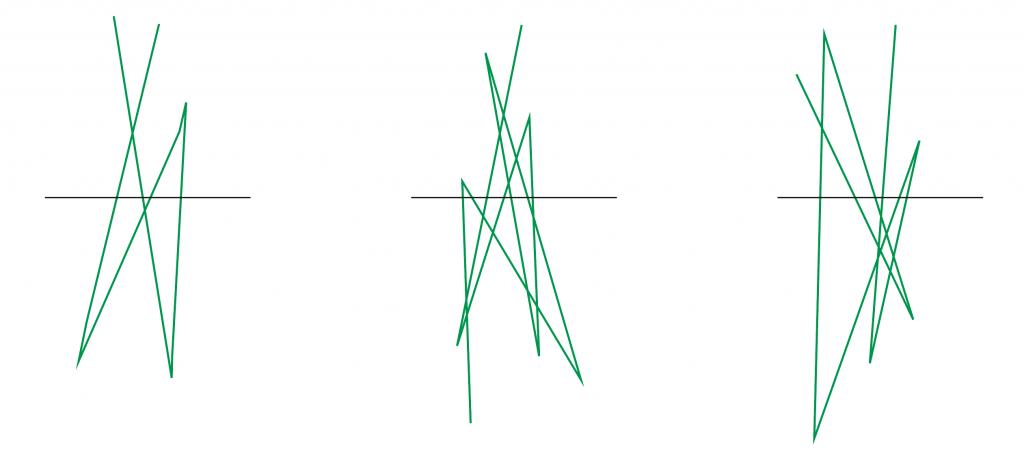

In this process of stripping away the elements, we can come to realise that competitions and data that are not based on the athletes themselves are boring and meaningless.